
Almost from the beginning our message to the villagers was, “One teaches two.”
The essence of what we were doing was very simple: We went to the villages. We worked with people and taught a few at a time how to plant fruit trees in their kitchen gardens. These trees were household names and people were familiar with some of the nutritional benefits of their fruits. We started with trees such as moringa, lemon, banana, papaya, guava, and amala. These trees produced fruits in a relatively short time, took very few skills to plant, and grew without too much care. We obtained the highest-quality saplings because these were to be the “mother trees,” which allowed people to generate additional trees through seeds or cuttings.
We provided more than just tree saplings. We were not horticulturists. We were social scientists and social marketers. Our reason for planting these trees was about more than providing nutritional benefits. For us, these trees were the tools to ignite a social movement for people to empower themselves for something much bigger. Thus, our message had to be simple and straightforward:
What you learn, teach two others.
Share two saplings with two others from each tree you receive.
It was not just a statement or a pledge for the tree recipients to sign. This was the core message of the program, and we invested a considerable amount of time and energy in projecting this idea. I would share with them the magic of the nuclear chain reaction. One energized atom sparks two others, and those two in turn spark two more. The cumulative results create a massive energy beyond imagination. And all of this takes place in a blink of time. Such synergy is not limited to atoms. It applies to everything. It is a universal law.
In one newspaper article about the “One Teaches Two” approach, I gave an example showing the amazing accumulation that happened when this law was applied to planting trees. Suppose one person were to give me a high-quality banana tree that produced fruit as well as five suckers (shoots that grow at the base of a banana tree and can be planted to grow a new tree). I would enjoy the benefits of having my own bananas and, from my surplus of five suckers, I could give one banana sucker each to two of my friends and they, in turn, could repeat the process. By the time the process is repeated only 32 times, 8,589,934,591 banana trees have been produced, which was more than sufficient to meet the banana needs of the entire world.
The important part of our message was for each person to realize they were not mere recipients; they were givers also. I would share a story about Buddha:
Buddha was traveling through a city. A hungry beggar asked Buddha for the leftover food in his dish. Buddha told the beggar that he would gladly give her the leftovers if she first went through the ritual of refusing the food when offered.
The beggar said that this was impossible. Her family had trained her to ask and not refuse. She had been hungry for several days and could not risk her refusal being taken seriously. Buddha gently told the beggar that the offer was firm, but only if she would refuse when offered the food. With a lump in her throat, mustering all her courage, she agreed. At that, Buddha offered her the food. But when the beggar refused, there was firmness in her voice. It was not a mere ritual. She went on to say that, once she acquired the courage to say “No,” she was no longer a beggar. She became one of Buddha’s disciples and great teachers.
I shared with the villagers that, in order to get out of the vicious clutches of chronic poverty, they had to change their perceptions of themselves as receivers and begin to see themselves as givers. From beggars to kings. To make this point, I would cup my hands together and extend them forward, as if asking for something, then turn my palms down, as if giving something.
Sharing was the key because it sparked responsibility. Parents share with their children because they feel the responsibility. The king shares with his subjects because he feels a sense of responsibility. Responsibility and success go hand in hand. I invited people to give me more examples, and they would.
They could share with two others the training they received from us, as well as the seeds or saplings from the mother trees that they received. All of this was within their capabilities.
That intellectual understanding was followed by a physical drill. I would raise two fingers high and ask the crowd, “How many do we have to teach?” In unison they would reply, “Two!”
“And when do we share our knowledge and skills with others?” I would ask. There was silence. I stomped my foot, one finger pointing to the ground. “Now!” I said, emphatically.
I used the drill over and over, until it became ridiculous and funny. People would shout “Two!” when my hand went up, and “Now!” when my hand went down.
I explained to them the importance of sharing immediately, rather than waiting for some uncertain future. All races were won by people who acted with immediacy.
That became my trademark. When people saw me at any place, they would automatically raise their hands and say, “Two!” then drop their hands down to say, “Now!”
The message was taking root.
Word of our work spread quickly from village to village. Sometimes the extent of the network being created surprised me.
Once, a friend and I had to cross the Ganges River by boat. We knew what the normal rate per person was for the crossing, but the boatman, knowing that a foreigner was present, was asking for ten times the going rate. Boatmen get so little from the regulars that they have to take advantage of any unsuspecting outsider. My friend negotiated a price with the boatman at about four times the regular price.
In the middle of the stream, the boatman asked, “What takes you to the other side?”
“We are going to Sacha Baba’s ashram,” my friend said.
The boatman became excited. “Oh, my! Sacha Baba is such a powerful man,” he said. “There is a man who came to visit him from America. Then this man had a dream to plant trees. He started to do that and as a result, now people are planting trees all over.”
My friend pointed to me. The boatman realized I was the man he was talking about. When we got to the other shore, the boatman stood there, with folded hands. He refused to accept any payment.
Despite the excitement among the villagers, the formula “One Teaches Two” had its skeptics. One of our volunteers told me in the beginning, “They are not going to tell two people.”
Eight years after Trees for Life planted its first trees, we saw proof of just how powerful the formula was.
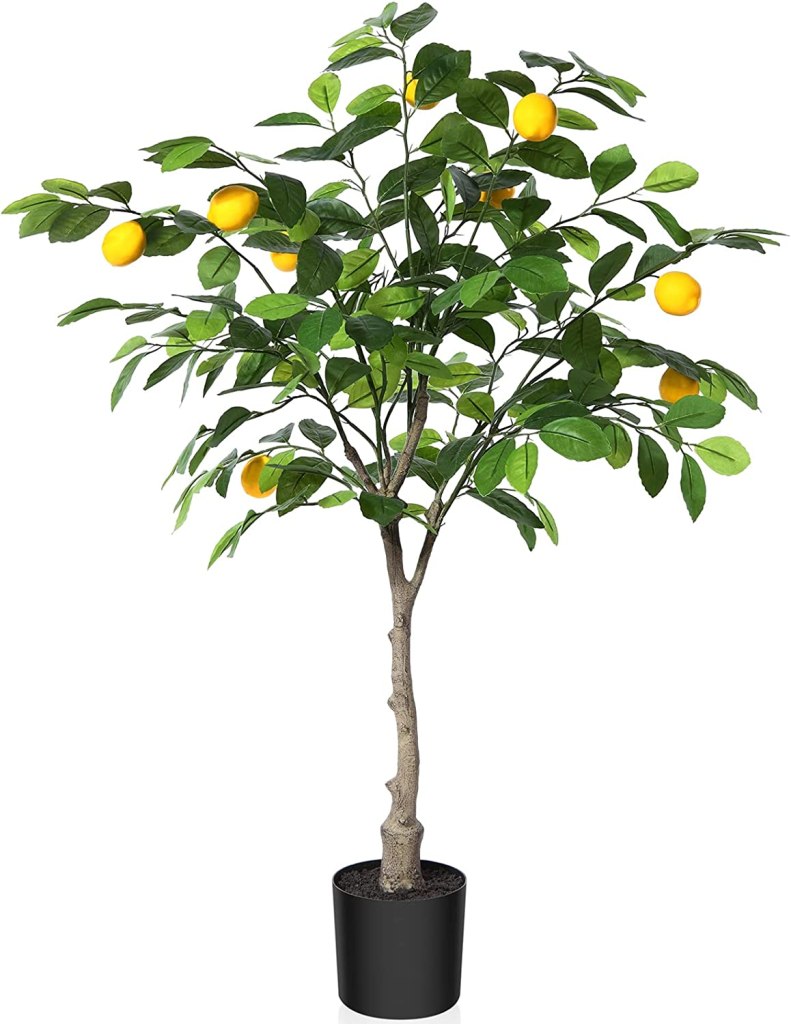
At our camp in a village in Orissa, considered to be one of the most impoverished states in India, an unfamiliar man showed up one day. He had traveled by bike from his village 40 kilometers away. He proudly showed us dog-eared photos of lemon trees that Trees for Life had helped him plant a few years before, starting with the best lemon tree saplings.
At his request, we traveled to his home to see his trees. What once had been four acres of marginal, water-logged land had been turned into acreage lush with lemon trees planted in beds two feet above ground to avoid waterlogging. And in between the trees, vegetable gardens were being cultivated. He said his income had increased eightfold in the previous three years.
A crowd of villagers started to gather. The man proudly introduced people to us by saying, “I trained him . . . I trained him and him . . . .” It was clear he had not only taught two, but many more than that. He had given them seedlings, taught them how to plant and care for the trees, and also taught them accounting, a skill he had learned by himself and considered of utmost importance.
“I must have taught more than a hundred others by now,” he told us.
For me, this man’s story answered a nagging question: Do people really fulfill the Trees for Life commitment of helping and teaching two others? His life was living proof. I realized that giving was not only in the souls of these villagers, it was in the souls of all people.
 balbirmathur.com
How wonderful! I love your method
Of inspiration for the people. I find
It cosmic humor after years of trying different methods it’s the addition of the fresh juice of a lemon that has brought my blood pressure to normal. Thank you!