
In 2005, Pakistan suffered a devastating earthquake. I was invited by the Pakistani Ambassador to the USA to help with the earthquake relief efforts. Telephone calls followed and two prominent Pakistani businessmen joined me in Pakistan. As guests of high-level Pakistani government officials, we were provided a helicopter, piloted by an Army major, to tour the devastation from above. Our guide was a brigadier general. Our flight took us over the hardest-hit regions, including the India-Pakistan border.
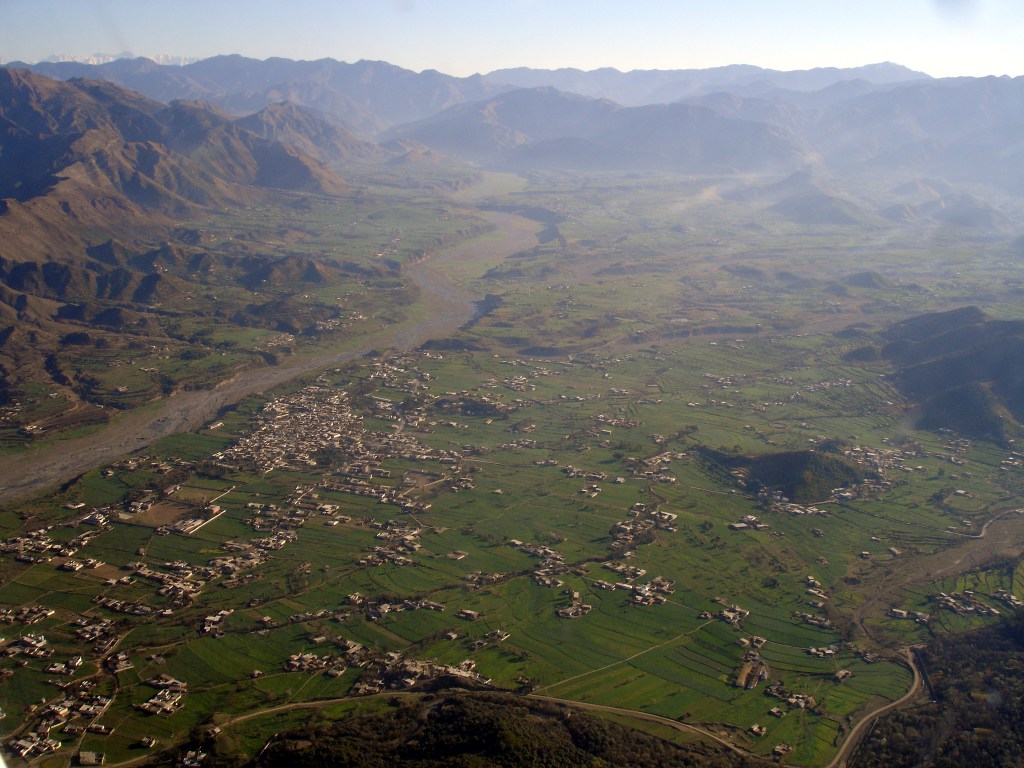
Afterward, I wrote a report informing them I could not develop a plan to help the victims of such devastation by passing over the area once in a helicopter. It would be necessary for me to meet the people on the ground, face-to-face. On a second trip, two months later, they provided me with a car, a driver, and a guide.
We traveled to seven villages over a widely-affected area. Many scenes were heart-wrenching. In one area, the entire mountain had been split in half, as a cake might be cut down the middle, obliterating the entire population. In another village, all the buildings had collapsed, killing everyone except the few who were out farming when the earthquake occurred. The eyes of these survivors were filled with pathos. One young man showed me the foundation of his small house in which 11 of his family members were killed.
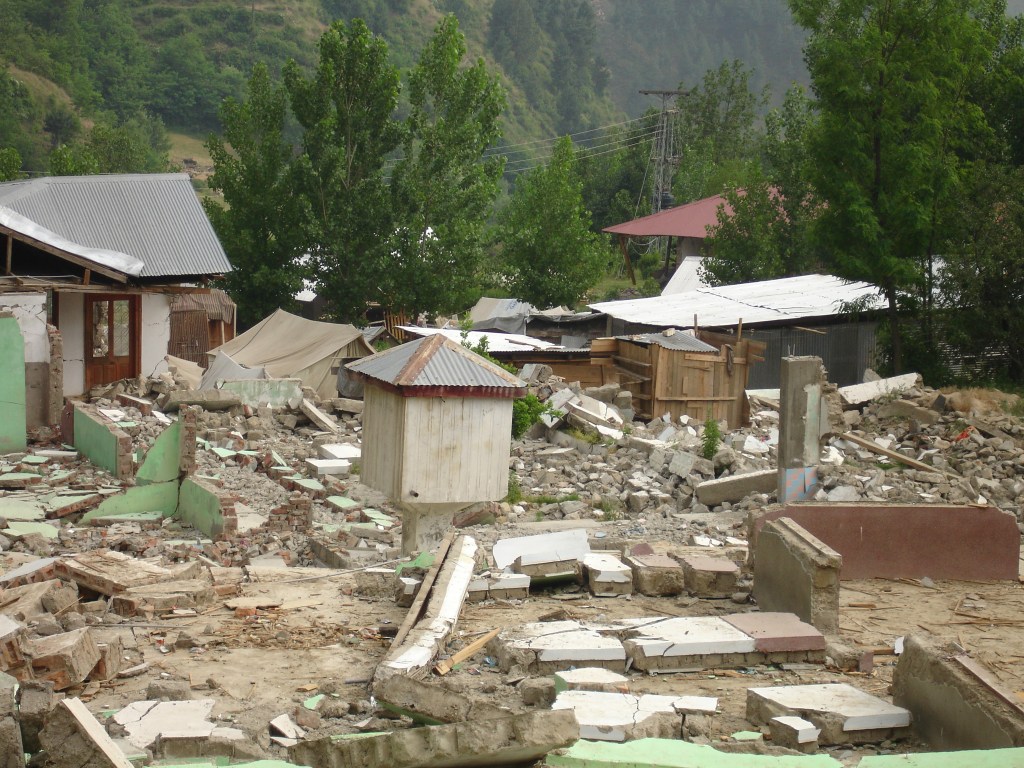
“What am I doing here?” he pleaded.
We traveled to seven villages over a widely-affected area. Many scenes were heart-wrenching. In one area, the entire mountain had been split in half, as a cake might be cut down the middle, obliterating the entire population. In another village, all the buildings had collapsed, killing everyone except the few who were out farming when the earthquake occurred. The eyes of these survivors were filled with pathos. One young man showed me the foundation of his small house in which 11 of his family members were killed.
“What am I doing here?” he pleaded.
We all prayed around the foundation of the old mosque that was no longer standing.
One of the villages was at an elevation of 7,000 feet. The government had arranged for us to have a guide from a nearby area because this was a dangerous part of the country, reported to be infiltrated by the Taliban. Several years before, President Bhutto had tried to visit, but the people stood with their guns pointed at the helicopter in the air. Bhutto had to turn around. A few days before my visit, a Pakistani wedding party was killed by American aircraft. The American government had apologized for it as a grave mistake, but the people were certain it was intentional. Emotions were high.
More than 50 men gathered to meet with me. Among these tall, sturdy mountain people was a thin man, about five feet tall, wearing a black turban. The guide told me he was their Mullah, the spiritual head of the community.
“Whatever he says becomes law,” the guide said.
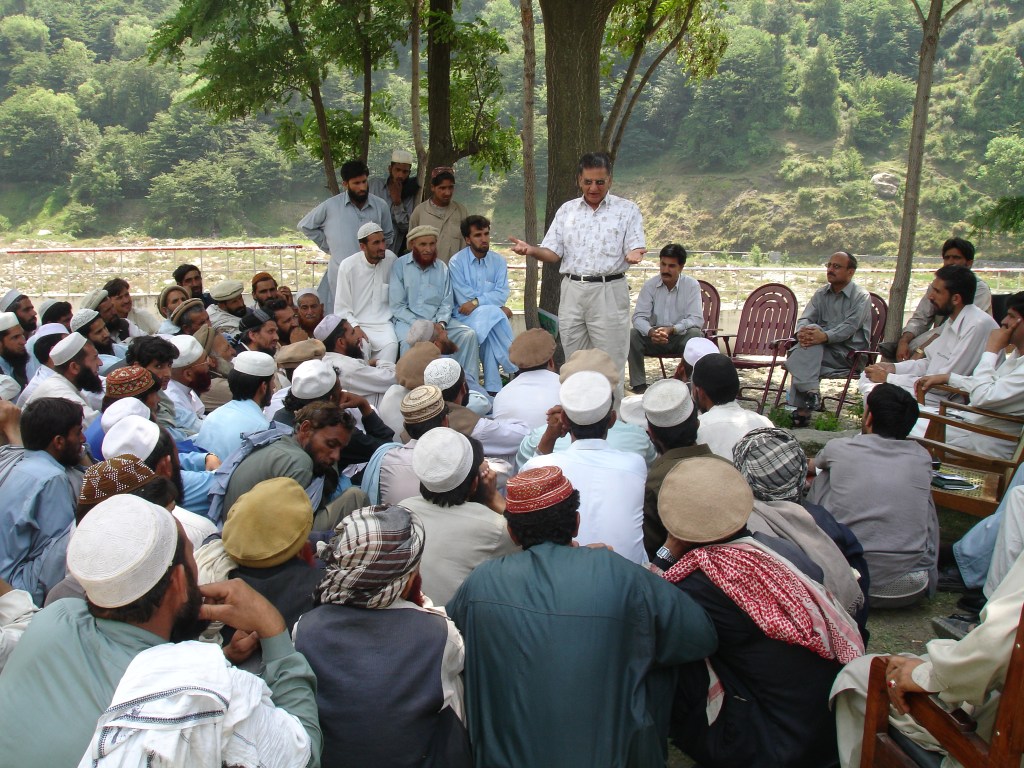
I was told I should speak to the people only through the local guide. I was supposed to pretend I was from Pakistan. They didn’t want anyone to know I was from America.
I refused to go along with that.
“People can sense deception,” I said. “That would defeat the purpose of my coming all the way here.”
It was a risky move, but I chose to address them directly. I remembered that the source of fear in human interaction is protecting lies. I had to be honest with myself and with them.
“I am a Hindu,” I said, introducing myself. “I lived as a child in what is now Pakistan. I moved to the United States, and I have an American wife.”
I saw my companions wince.
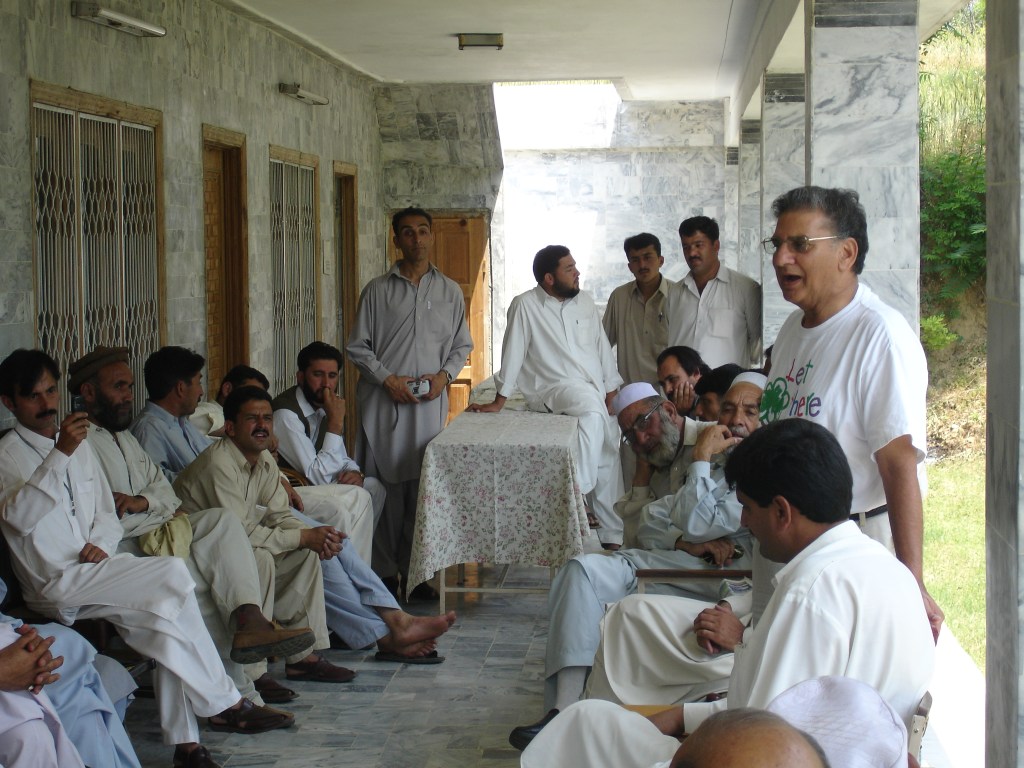
“If you are waiting for the government to help you, nothing will happen. In the long-term, you must help yourselves. If you do not, you will always be poor and dependent on the government. If you rely on others to help you, they will give you crumbs. They cannot give you the honor, dignity and respect that you have inside of you.”
It was the same mantra of self-help that I had shared over and over again since the beginning of my work in the Indian villages.
The message spoke to these proud people and their long tradition of independence. I could see the message connecting.
When I was through, the man in the black turban stood up to speak.
“We have lived in this area for thousands of years,” he said. “No foreigner knows this area better than us. There is nobody who can give us advice about what we should or should not do. We are survivors. We have overcome many problems in the past, and we shall meet this challenge also.”
The Mullah’s voice was strong and firm, far larger than his physical size. His tone was defiant. By this time, I was sure I had made the wrong decision, perhaps putting the entire team in danger.
He continued, “But here is our brother from America, who is surrounded by all the worldly comforts anyone could imagine, yet his heart is so touched by what has happened to us that he has come all the way from America, leaving his wife and children, to help us.”
I thought he was making a parody of my coming there. He wasn’t finished.
“Allah asks us to listen to people of pure heart. In the name of Allah, we must welcome our friend and pay attention to what he has to say.”
They gave me the closest thing to a standing ovation. Every man, wearing their oversized turbans, got up and gave me a bear hug. The village head insisted that the community put on a feast for me and sacrifice a sheep in my honor. I laughed and told them it was my misfortune because I was a vegetarian.
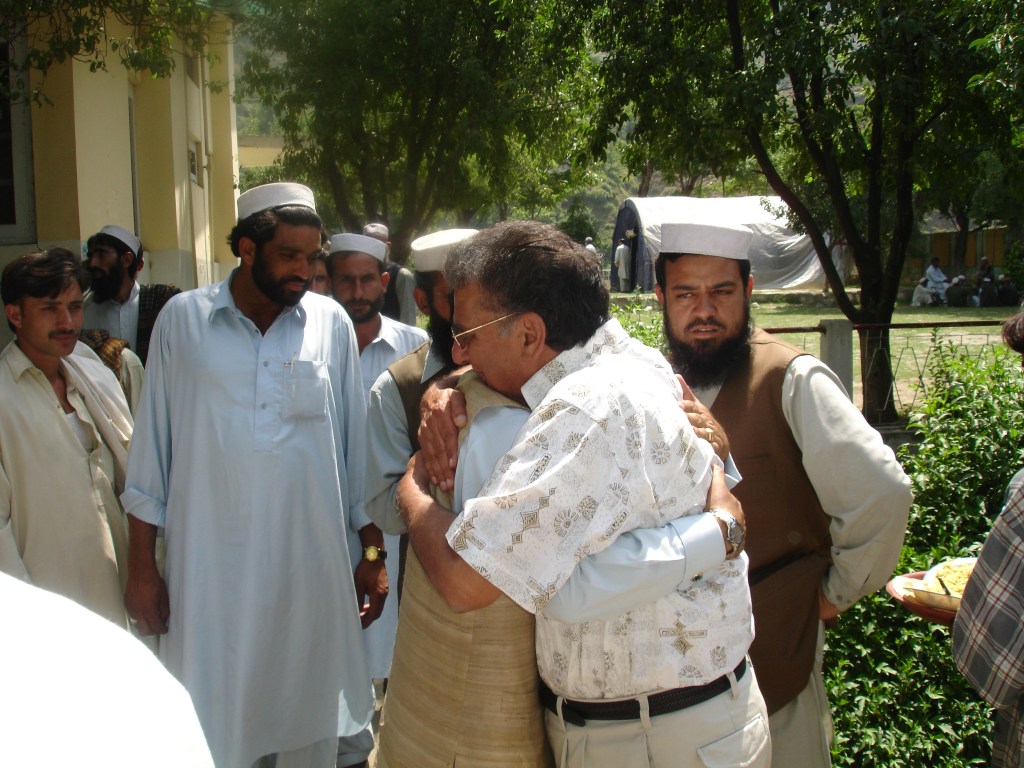
“In that case, my wife will fix channa daal (lentils) for you,” he said. He was insistent. “When people such as you come, we cannot let them go so easily.”
If not for meetings I had on my schedule for the next morning in the capital, I wouldn’t have been able to resist that once-in-a-lifetime invitation. After we had driven a few miles from the village, our team, which was now in three cars, made a pit stop. The team members were almost giddy with what had taken place.
When it was just the two of us, the driver who took us to the seven villages confided his thoughts about the trip. He was born in the area.
“Sir, the moment you leave, nothing will happen,” he said. “I have been a government driver for a long time, and I know how officials make big plans and promise everything under the sun. However, there is no intent behind it and thus nothing takes place. I am witnessing the enthusiasm you have created. Please stay in Pakistan to make sure these things can take place. People will get things done while you are still here,” he pleaded.
“I cannot stay here,” I said. “I have a wife.”
“Call her here. You cannot leave this place or all the work you have done will come to nothing.”
“It will not be safe for her to stay here,” I said.
“She will stay with my family, and she will be under our protection,” he assured me.
“Our work is not through the government,” I explained. “We are dealing directly with the people. It is a vision, not a task to achieve. Let’s see what happens from this trip,” I told him.
On the day before I was to leave Pakistan, the government minister threw a big party for me. There must have been two dozen government officials. They had at least 20 vegetarian dishes made just for me. I was the only one partaking.
A government minister, other than my host, came over to me and asked me to have lunch with him the next day. When we met, he asked, “Mr. Mathur, we are both Punjabi. Be frank with me. What portion of the money do you want from this?”
The purpose of all that wining and dining became clear. They were expecting me to attract large grants from the United States for Pakistani relief efforts, and they wanted to know what my cut would be. In developing nations, a large percentage of monies intended to help people in need go to line the pockets of government officials.
“I have come simply to help my brothers and sisters in Pakistan who need my help,” I answered.
With that, lunch was over. He left me, and I finished lunch with his assistant.
Three months later, I was back in Pakistan on another matter and paid a courtesy call to the government minister. The same driver who had warned me nothing would change when I left happened to be in the parking lot. When he saw me come out of the building, he started to run towards me from the other end of the lot. He was over six feet tall, a huge man. Against all protocol, he lifted me off my feet in a bear hug.
“Sir! In those villages, they have started the work. They are not waiting for anybody!” he said. “They are not waiting for anybody!”
He had seen with his own eyes what happens when people feel inspired. He had become a convert.
 balbirmathur.com
That’s truly inspiring!!! Excellent
Work! I remember when it happened. This story is reassuring.