
I received a notice giving me ten days to leave the country.
Tom Salter, my retired engineer friend who had become my chief mentor by this time, advised that the only alternative for me to beat deportation would be to take the political route. Politicians, he told me, respond to pressure from their key constituents.
My network came in handy. Within 24 hours, the Kansas congressional delegation received dozens of telegrams from some of the best-known people in Wichita.
I received a call from the political assistant to Kansas Senator Frank Carlson. She said, “We are receiving all these telegrams, and we don’t even know who you are.” It just so happened that Senator Carlson was going to be in Wichita within the next few days, so she arranged for me to meet with him. He was going to address a large meeting, and I was to meet him at the exit door of the convention hall.
When I met Senator Carlson, he invited me to jump in the car and drive with him to his next destination, which was not too far away. In those few, brief moments, he assured me that he would take the necessary action to prevent my deportation. I thanked him and reminded him that I only had a few days until I would have to leave the country.
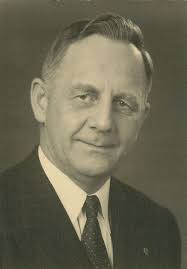
That was Friday morning. On Monday, I got a call that Senator Carlson had introduced a bill in the U.S. Senate on my behalf.
A bill in the U.S. Senate on my behalf!
Senator Carlson received several more letters and phone calls from people in Wichita, thanking him. His assistant and I became friends on the phone. She said, “Man, you have lots of friends.” She marveled that they included both Republicans and Democrats.
When things calmed down a little, she told me that the bill was introduced in the Senate to gain time to work things out with the immigration authorities. Those types of bills are never allowed to get to the Senate floor for a vote.
Meanwhile, a letter arrived telling me that an immigration officer would interview me at the courthouse in Wichita. Again, I worked my constituency. About 20 of the most influential people in Wichita went to the courthouse to show support. The immigration officer was surprised, but told the delegation of supporters that he was sent from Kansas City just to get facts; he was not a decision-maker. He informed us that the decision would be made by his boss in Kansas City. This officer was very courteous. He laughed, complimented me for all the friends I had, and thanked them for coming. Then he took me to the private room for fingerprinting.
A few weeks later, I received another summons, this time to meet with the chief immigration officer in Kansas City. I marshaled four prominent citizens of Wichita to go with me. We left at 6 a.m. for the 200-mile trip to Kansas City.
The chief immigration officer insisted on meeting with me alone. The others were not allowed to see him. Sternly, the officer told me that I should prepare to leave the country. He said none of these political actions were going to have any effect on his decision.
While we drove back to Wichita, my friends suggested I contact an attorney. I could not see what good it would do. A deep sense of darkness enveloped me, with no signs of hope. All doors were being shut, no openings left.
One of the leading and most well-known attorneys in town had bought a carpet from us and had become our friend, so I approached him. He became incensed at the very thought that the chief immigration officer in Kansas City had refused to meet with the top citizens of our city. He called his secretary and dictated a rather harsh letter to the head of immigration in Washington, D.C.
I tried to stop him. “Please don’t do that. We don’t want to antagonize the chief in Kansas City any more,” I said.
“Now it is between him and me,” he said, waving me off. His determination was reflected on his face. The lawyer signed the letter and it was mailed that day, with copies to Kansas Senator Carlson and the ex-Senator Andrew Schoeppel, who had been a partner in his law firm.
A few days later, I was at our shop with a saleslady, and she got a call from the lawyer saying, “Tell Balbir not to leave the shop. I’m coming with an urgent legal matter.”
I said, “Hold on, let me talk to him.” But she said he had already hung up.
I left the floor for a few minutes to use the bathroom. When I returned, the saleslady said the lawyer had come by and was very angry that I had not stayed there. He left instructions for me to come to the Lassen Hotel restaurant next door immediately.
When I got to the restaurant, he was waiting for me with another lawyer. “You better sit down,” he said. When I was seated, he continued. “I’m afraid we have bad news. They have refused your appeal, because you clearly violated your student visa.”
My heart sank and my throat went dry. My worst nightmare was coming true.
Then the lawyer pulled out an envelope. “Instead, they sent you this.” He opened the envelope, took out a small card, and handed it to me. The card had official-looking insignias and writing on it, and at first I didn’t know what to make of it. Then it dawned on me that the title at the top said, “United States of America Permanent Resident.” It was my green card!
I had no idea how this twist had come into things, but somehow his letter had resulted in them granting me permanent residency in the U.S.
This whole experience was harrowing, yet magical. I had the feeling that something, somewhere, somehow was making all this happen. Indeed, I had contacts and friends. But they were cultivated simply as friends, not for any purpose or personal gain. This was beyond all of that. I felt as if someone had taken me on my first roller coaster ride.
It would not be my last.
 balbirmathur.com