
The sun was just rising when the bus rolled into Wichita, light streaming in as if through a fine sieve. Glued to the window, I was witnessing a mystical scene.
September 21st, 1958 had just dawned. I was three months shy of my 23rd birthday, with six dollars in my pocket. I could hardly wait to reach the Wichita bus station.
My sponsor, Bill Graham, had conveyed to me that upon arrival in Wichita, I should go straight to the Lassen Hotel. His wife would pick me up at noon to take me to their home for lunch. I couldn’t rest or sleep much. Not wanting to be late, I went to the lobby at 11 a.m. I waited until 3 p.m., but no one came. I didn’t know who to call or what to do.
That evening, one of Graham’s assistants picked me up and took me to his house for dinner. He explained the reason for my missing Mrs. Graham. She had expected to pick me up at the curb outside the hotel. I was waiting for her in the lobby.
Tired and jet-lagged, I felt a peace descend on me that first evening in Wichita. It was a calm that might befall a child who has just found his home after being lost for many years.
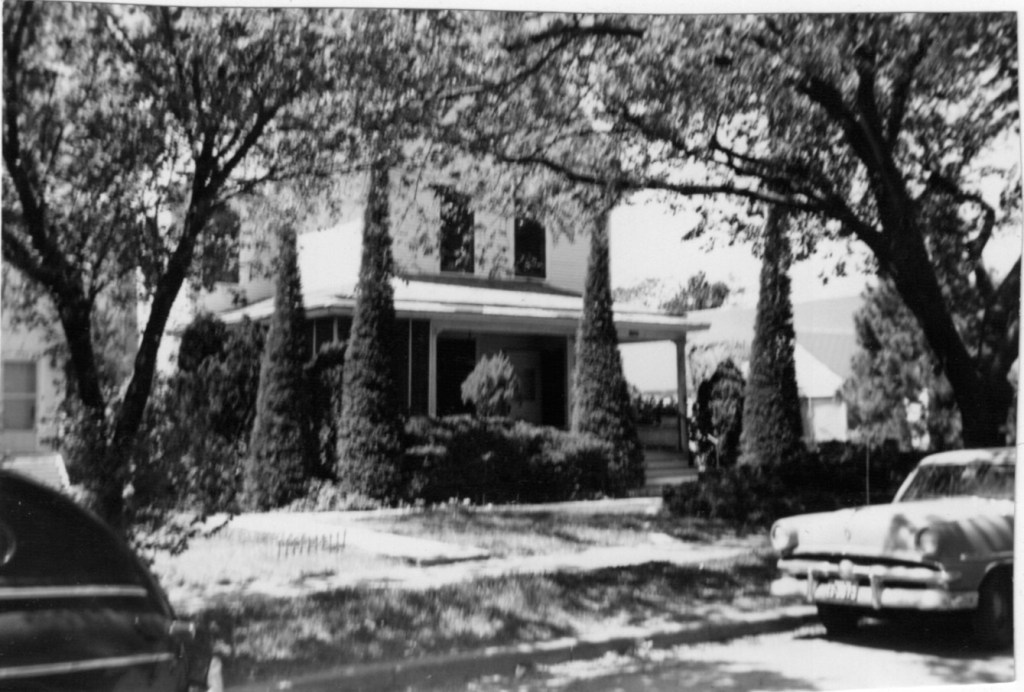
The next day, dressed in my dark blue woolen suit and red, polka dot necktie, I was taken to Mr. Graham’s office, where I was introduced to everyone. Later that afternoon, his wife took me to a boarding house for students—right across from Wichita University, where I was enrolled. This house was owned by an elderly couple in their seventies. The cheapest room in the house was the small attic. It was just as wide as the steel-spring bed. Because of the slanted roof, there was no standing room. I had to bend over to cross the room. Rent was $2.50 a week.
That house was to become more than a home. It turned out to be a community. Soon I had 16 other students as my friends—and supporters. My biggest cheerleaders were the owners of the house. They were not just landlords; they were houseparents. They were just as nice as any angel could be.

Funds were an immediate issue. Mr. Graham, who had many rental properties, gave me a part-time job with the maintenance crew. I was assigned to be a carpenter’s helper. However, I could not hammer a nail without striking my thumb. I had never held a hammer before. Graciously, I was reassigned to a painting crew, but I was fired after the first day because I misunderstood the instructions and painted the wood baseboard along with the wall. That led me to a lawn-mowing job, but someone forgot to tell me I had to bring my own lawnmower, which I did not have. I was moved again. This time, I was assigned to scrub the floor at the main office as part of the janitorial crew. That I could do.
I was moving fast, but in the wrong direction.
Breakfast was usually a Hershey chocolate bar or an apple, either of which cost five cents each. Lunch was at the student cafeteria, for about 50 cents. My main evening meal was about six slices of white bread and Campbell’s soup straight out of the can, which cost only 10 cents. One night, some students asked me if I would like to join them for barbeque. Even though I did not know what I was being asked, I joined them. The ribs plate was 85 cents. I brought the whole plate back home without touching it and ate it for the next three days.
All this may sound as if I was living in deprivation. On the contrary, at 75 cents an hour, I figured I was making $12 a week. That was a lot of money for someone who had none to start his new life.
Attending classes was a total washout. The classes might as well have been in Japanese. I understood the written words, but the problem was understanding the spoken words. People spoke fast, and I could not decipher their accents. Each sentence seemed like one big, long word. People had to repeat themselves or speak slowly. Even then, I had to rely on facial expressions to make out what was being said. I could see on my listener’s faces that they, too, were having the same problem understanding me. But in a month or so, this problem disappeared. That was perhaps the time it took for my ears to get attuned to the sounds of American pronunciations.
During my first week, I wrote a letter to my cousin in India. I reported, “Everyone in America smiles all the time—every hour of the day.” After a month, I realized the smiles on everyone’s faces had disappeared. I wondered, what happened? Then it occurred to me that when I first arrived, I was smiling all the time and people were smiling back.
I started to smile again.
 balbirmathur.com