
I was six years old when I first questioned the meaning of life. I remember the moment as if it were yesterday.
My family was on vacation in the Simla Hills, in a rented cottage with a wide view of the mountains and valley below. That evening, as always, when the sound of the town’s power generator filled the otherwise peaceful valley, my mother and I went inside, where she switched on the light in the front room.
A solitary bulb hung from the ceiling on a twisted wire. The generator barely produced enough power to create a faint glow in the bulb. One could barely make out faces and forms, but no details—not to speak of reading anything. Since the light was so dim, people irreverently called it a “shadow of light.”
My mother folded her hands in prayer, and I followed her lead. It was our custom to offer thanks as the lights came on each evening. I was told that light was a gift from God to illuminate our lives. Without light, life would be unimaginable. I remember the exact prayer we recited, because it was the offering of thanks we gave several times a day in various situations:
Om yogi yati muni dhyan lagawen
Sharad Narad sheesh navaven
Namoh namoh jai namoh shivaven
Sur brahm adi paar na paven Om
My parents had told me the meaning of this prayer was “Oh God, whose mystery none of us can comprehend, and who we all worship by different names, to you we bow.”
My mother turned the light off, and we went outside. Each evening, four metal chairs were set outside around our radio. It was a German-made Gruendig shortwave radio encased in a large wooden cabinet. A German woman who lived in our city in India had left the radio with us for safekeeping when she was interned at the start of World War II. The radio was proudly displayed in our living room and traveled with us in a large, custom-made wooden trunk. At the time, my parents never mentioned that the woman who left us the radio was German, and we never heard from her again.
We were one of the few families in the valley with a radio, so friends would drop by in the evening. The Second World War was in full swing, and everyone eagerly awaited the BBC News.
That evening, one chair happened to be empty, so I sat down with the adults. I could not understand the English broadcast, and I got bored. Afterward, I asked what the news was about. My cousin Padma, who was nine years older than me, cynically told me the British soldiers were “bravely retreating” as the Japanese were advancing.
At that moment, a question arose in my mind. I had recently witnessed the birth of my younger sister, Vijay Laxmi, who was delivered by a midwife in the bedroom of our cottage. Twelve days later, I witnessed my grandfather’s death. Now I was hearing of people killing each other in the war.
I voiced the question out loud: “Why are we born, and why do we die?”
The three adults looked at one another with expressions that said, “Who would like to tackle this one?!” From their momentary silence, it was obvious they had not anticipated my question.
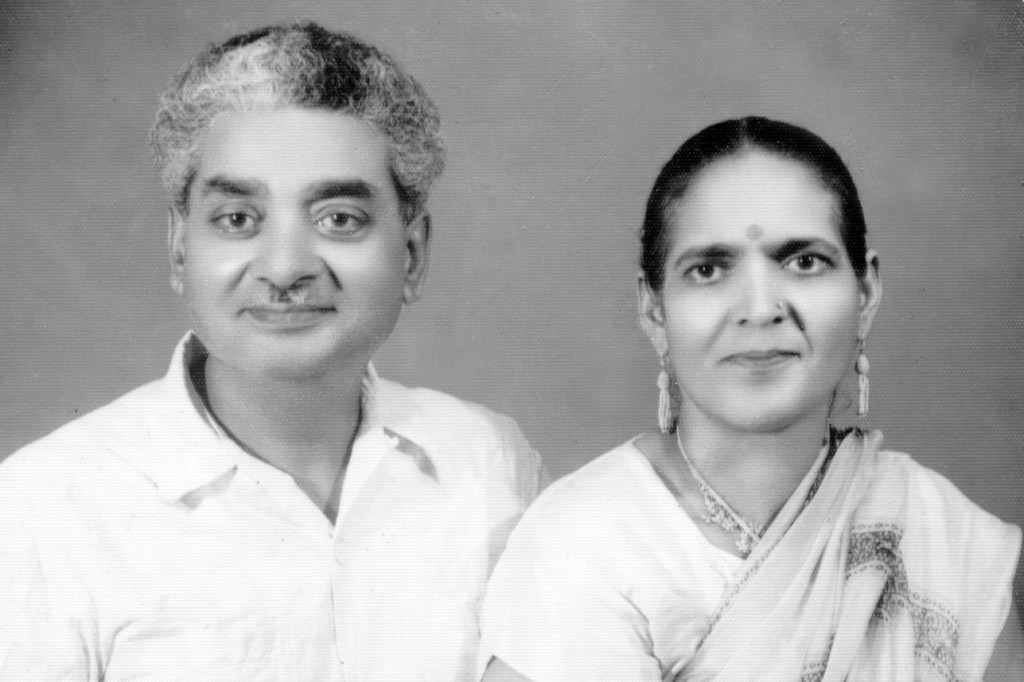
My father spoke first and talked about the journey of life and the will of God. Then my mother tried to elaborate on what he had said. Padma also shared her ideas. They tried to explain that we emerge from God and go back to God, and this life is but an interlude.
I raised another question: “If, after death, we return to God, then why does everyone want to live so long?” I argued that when we travel from one place to another, we try to go by the fastest means possible. “So, why do we take as long as we can on this journey of life?” I inquired.
The answers that followed seemed fuzzy to that six-year-old sitting on a metal chair overlooking the enchanting valley. In the end, I asked in frustration, “If we go back to God after death, then why should I not die now?”
My father tried to answer. He did not rush it. Each of his words was deliberate. He said something to the effect that finding an answer to this question is the purpose of the journey, and each one of us has to find our own answer.
After that, the subject changed, and the adults went back to their own chatter. But I paid no attention to them. I was lost in my own thoughts, in some other world. It was not long before the sun went down behind the mountains, and the valley was engulfed in darkness. One by one, the others went inside, leaving me alone.
I remember very well my pose of deep concentration—lips pursed, shoulders hunched, hands holding tight to the sides of the metal chair seat, body tense and leaning forward, legs dangling and swinging—as I pondered the question, “What is the meaning of life?”
Finally, my mother called from inside: “Son, it is getting dark and cold! You better come in now!”
I did not answer. The cool breeze felt good.
*******
A couple days later, I woke up in the middle of the night with a severe stomachache. When I called out, my mother rushed to my bedside. Writhing in pain, I explained my condition. She set the kerosene lantern on the floor and knelt beside my bed. She clasped her hands together as if in prayer and pleaded, “Son, please promise me that you are not going to will yourself to die.” Her face was lined with deep concern.
I was surprised. I had asked about the meaning of life—I had no intention to die! At that moment, in some odd way, it became crystal clear to me: I wanted to know why I was here, and the answers being provided were not adequate.
Something flickered within me. It was as if I caught a glimpse of movement, but I could not make out what it was. Like seeing a stranger whose form was clear, but the details were indiscernible, shrouded by the “shadow of light,” and I would have to wait for daybreak so I could search and hope that the shadow would reveal its mysteries.
 balbirmathur.com
Very poignant and mystical experience.
A blessing to read your stories. Thank you
For sharing so that we can reflect our own experiences.