
“I have a confession to make.”
My mother’s statement startled me. I was in India visiting my mother, who was not in good health. She was perched on the side of her wooden bed, and her body was gently swaying forward and back. I looked up from where I was sitting and found her eyes focused directly on me.
I was startled because I had never heard any such words from her in all my 54 years. Before she could say anything more, my mind started racing, imagining what she might have to share. Was she suffering from some serious ailment? Had my father committed some grievous mistake? Had she been conned out of all her savings? Or, perhaps I was not my father’s child? Such fearful thoughts raced through my mind.
I was speechless, my lips pursed, wondering what Pandora’s box she was about to open. I looked up at her again and saw a twinkle in her eyes aimed at some distant place. I could not decipher the mystery of her expression.
Then, with a gentle smile, she began her story: “My first child, Sharda, died in my arms at the age of ten months.”
Another shock. This was the first time she had ever spoken to me about the death of her first child. Twice, when I was a boy, I had tried to ask her about it. Both times she had laughed it off, avoiding the question. I had figured that her feelings were too deep for her to bear speaking about it. Now I sat in stunned silence as she continued.
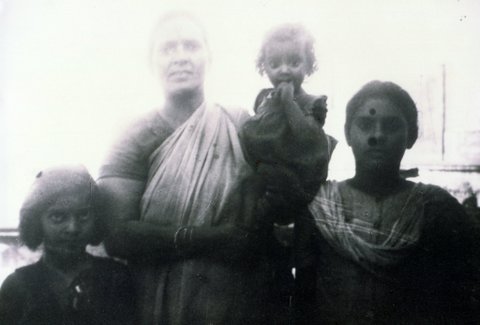
“It was pneumonia, and my baby’s chest was throbbing heavily as I held her to my breast. There was no treatment for pneumonia at that time. I sobbed helplessly as she took her last breath. A new mother at 22, I cried day and night for my precious child that I had wanted so desperately.
“I became extremely depressed, as I had lost the most important thing in my life—my very reason for living. Worried for me, my mother took me to a distant city to see an ascetic holy man who was known for helping women who wanted to have children.
“The elderly holy man was dressed only in a loincloth and was sitting on a small platform beneath a large tree in front of his straw hut. In front of him was a small fire that was almost burned out. There were about 50 people sitting in front of the man in total silence. My mother and I quietly sat down at the back of the group.
“After some time, the holy man beckoned me to come forward. As I stood before him, with folded hands, I bowed deeply. He took a pinch of cold ash and put it in my mouth as a blessing. Then he said, ‘Celebrate, because you will have a son. He will rise above worldly affairs.’
“I said to the holy man, ‘I will dedicate my son to you.’ Then, I reverently walked backward away from him until he was out of my sight.”
A slightly bemused expression came into her face: “I have no idea what moved me so much in that moment that I would dedicate you to him.” After a pause, she continued, “Not too long after that, you were born. When I first took you in my arms and looked at you, I was filled with a heavenly joy! But I was also reminded of the sacred vow I had made to that holy man. I was afraid if I took you back to him for dedication, you might also give up everything, including your own mother. I became terrified of losing you. I had already lost one child—I could not bear the thought of losing you also. I wanted you to grow up in our family, get married, and have children and grandchildren. I wanted to see you prosper, not become like that naked ascetic who had blessed me.”
“But I had made a sacred vow and knew that I had to keep it. I decided that, come what may, I would fulfill my obligation when you were one month old. But when that time came, I postponed it and said I would take you when you were one year old. At each of your birthdays, I was reminded of my vow, but still my fears were so strong that I postponed it until the next year, again and again.
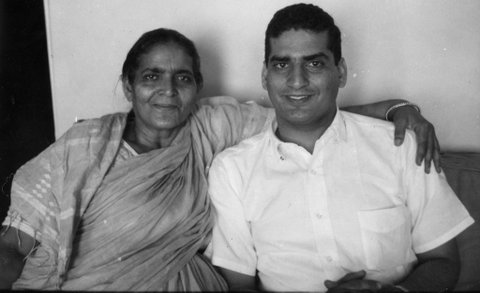
“Now I am 78 years old, and this is my only unfulfilled promise. I want you to go and present yourself to that holy man for his blessing.”
A hushed silence fell over the two of us. Finally, I asked, “What was the name of this man?”
“I do not remember,” she said.
“Which city had you gone to?” I asked.
“Hoshiarpur,” she replied.
“Which part of Hoshiarpur did he live in?” I asked.
“I have no idea,” she said. “My mother took me. I just remember that we walked several miles from the railroad station.”
“Mom,” I responded in frustration, “that was 55 years ago, and you have no idea what his name was or where he lived in Hoshiarpur! Most likely that man has been gone for many years. How do you suppose I will be able to present myself to him?”
“Yes, I know!” she said, a smile crossing her lips. She must have realized how ludicrous her request sounded. “He will be gone, but there must be someone connected to him. Perhaps one of his disciples! Y-y-you know what I mean,” she stammered.
I held my bowed head with both hands. “Mom, it’s too late to do anything about it now,” I protested. “We have no name, no address, and no way to even start the search!”
Now she was laughing boisterously, and the mood had changed. But still she was insistent. “There will be someone.… one of your friends—and you have many. Ask Sinha!”
“Mom,” I said, “I would sound so silly!” My face was contorted in a grimace, and I shook my head vehemently.
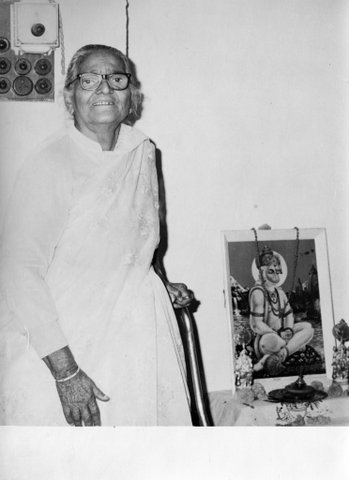
“I beg you to try,” she said. Looking back now, that conversation with my mother feels a bit ironic. Neither of us realized it at that moment, but perhaps we both knew it on some level: my search had actually begun a long time before that. I had not been searching for that man, of course, because I did not know about him. But I had been searching, without knowing what I was looking for, or why.

 balbirmathur.com